
Damp survey Haarlem
A damp survey Haarlem homeowners and buyers can trust starts with finding the cause, not with selling a cure. This page is written for expats and international buyers, tenants and owners in Haarlem who are dealing with damp patches in the cellar, a damp crawl space, wet joist ends, damp patches and black mould on walls and ceilings, or a smell of sewage. Premiumkeur traces damp problems in Haarlem and the rest of Kennemerland. We’re building surveyors, and we don’t do the repairs ourselves.
Premiumkeur has 4.9 stars from 704 Google reviews and 104 Trustpilot reviews. You can read them on Trustpilot. Want to book a damp survey? Call 023-2340040 (from abroad +31 23 234 0040) or use our contact form (in Dutch).
We work with professional equipment: an infrared camera, calibrated moisture meters, an endoscope, a smoke generator, a crawl space robot and ultrasonic leak detection. Premiumkeur Haarlem is based at Tempeliersstraat 63 and knows the houses in this region. Many homes here were built between 1880 and 1940 and have a timber floor above a crawl space. That’s exactly where a lot of damp problems start. Seeing black mould or damp patches on a wall or ceiling and you can’t work out where it comes from? Then have Premiumkeur carry out a damp survey. Our YouTube channel shows how we work (most videos are in Dutch).
Our standard report is in Dutch. We can deliver it in English for € 100 extra, and on site the inspector explains everything in English, so you can ask your questions while you’re looking at the problem. Buying a house? Then a damp survey fits well alongside a building survey Haarlem buyers book before they sign, which you may also know as a home inspection.
For more background and 35 cases from Haarlem and Kennemerland, read our Building inspection Haarlem knowledge base.
Dutch version: Vochtinspectie Haarlem (in Dutch).
What does a damp survey in Haarlem cost?
A damp survey in Haarlem costs from € 499. If a leak has to be traced, the price is between € 499 and € 599. A damp survey of a cellar costs € 699. All prices include VAT (prices as of October 2026). The English report is € 100 extra.
Some damp problems are fairly easy to explain. Others need a cherry picker or scaffolding to get to the cause, for example a gutter or a chimney high up on the facade. Scaffolding or a cherry picker isn’t included in the price and comes on top. We don’t charge a call-out fee for a damp survey.

A damp survey or another specialist investigation
You can hire Premiumkeur for a damp survey, but also for other specialist work. Our inspectors are trained in more than one discipline. Think of a Building survey Haarlem, a crawl space inspection (in Dutch), a survey of cracks, a roof survey, a balcony inspection for a VvE (the Dutch owners’ association in a block of flats) or a foundation risk assessment (phase 0). We also carry out foundation investigations in phase 1 and 2 and place and read monitoring bolts; our page Foundation inspection Haarlem explains all of that in English. Other work includes a baseline survey or nulmeting (in Dutch) before a renovation or demolition next door, a long-term maintenance plan (MJOP) for your VvE (in Dutch), the Handover inspection Haarlem of your new-build home, a second opinion (contra-expertise) in a dispute with a builder, and the inspection of a listed building. About the listed buildings in this city we wrote the knowledge base on listed buildings in Haarlem (in Dutch).
Premiumkeur is NHG-approved, works to NEN 2767 and NTA 8060 and has an office in the centre of Haarlem, on Tempeliersstraat.
An independent damp survey
There’s really no such thing as a free damp survey. Online, several companies offer one. Free usually means you don’t pay separately for the survey; the cost is earned back on the repair work that follows. Whoever finds the cause then also earns from the solution. That makes the advice harder for you to check, and a quotation can include more work than you need.
Premiumkeur doesn’t carry out repairs, doesn’t sell products and doesn’t recommend repair companies. We’re a building consultancy and give you independent advice on the cause of the damp and on what’s needed to solve it.
Choose your own damp surveyor, not one from the agent’s network
Because the Dutch system is new to you, it is natural to follow your estate agent’s suggestions. Keep in mind that the agent is paid when the sale goes through. That’s true of the selling agent and usually also of your own buying agent (aankoopmakelaar). A surveyor who gets a lot of work through estate agents has an interest in keeping that relationship going. That’s a structural conflict of interest built into the system, and it says nothing about any one person.
Our advice is simple. Choose an independent surveyor yourself, even when the estate agent or the mortgage adviser mentions a ‘partner’. You’re free to bring your own building surveyor to a viewing or an inspection.
The same goes for damp. If you have damp problems, don’t rely on a free damp survey from a company that sells the solution itself. Have the cause investigated first by someone who doesn’t do the repair, and then ask for quotations with that report in your hand.
Questions to ask before you book
- Do you receive work or fees from estate agents or mortgage advisers?
- Will you actually go into the crawl space, and onto the roof where it is safe?
- Do you assess the foundation?
- Do you sell or carry out damp-proofing or other repairs yourself?
- Can you confirm your independence in writing?
Read the general terms and conditions too. What an inspection covers differs from firm to firm. Some inspections are ‘global’ (globale keuring), with limits on the roof, the crawl space or the foundation.
Premiumkeur doesn’t work with estate agents, mortgage advisers, valuers or notaries, doesn’t pay or receive referral fees, doesn’t recommend repair companies and doesn’t inspect for sellers.

Moisture meter on a wall with bubbling, damaged plaster

Inspector taking a moisture reading at the skirting next to a parquet floor
Damp in Haarlem houses
The homes we inspect in Haarlem and Kennemerland were often built between 1880 and 1940. Many of them have a timber floor above a crawl space. If the crawl space is poorly ventilated or the groundwater is high, the joist ends in the outer wall get wet. That’s where wood rot starts. In 156 building inspections in this region we found wood rot in 47 percent of the reports.
We see a lot of rising damp here as well: in 21 percent of those inspections, against 11 percent on average across all our reports. That’s about twice as often. Leaks or signs of leaks were in 64 percent of the reports.
The ground differs from one neighbourhood to the next. Many listed buildings in the old centre stand on shallow foundations, so without timber piles. In the Rozenprieel, in a bend of the Spaarne, there’s peat and clay and the ground settles unevenly. In the coastal towns of Zandvoort and IJmuiden, facades, window frames and roofs take a lot of wind and rain. There we pay extra attention to penetrating damp.
“We’ve noticed that when it rains there’s a musty, mouldy smell coming from the kitchen on the ground floor.” (translated from Dutch). A smell that gets worse when it rains usually points to damp or water under the floor, so we advise a damp survey that includes the crawl space. We first ask you to check there’s at least 50 cm of headroom and to send a photo of the hatch.
Groundwater and damp in Haarlem
Damp and groundwater have been an issue in Haarlem for years, and the municipality has been dealing with it for a long time. In 2014 Haarlem105 reported that residents of Bosch en Vaart had had water in their cellars and crawl spaces for a long time, with floors warping and damp in the walls. The neighbourhood council pointed to the renewed, deeper quay wall of the Leidsevaart and to blocked drainage. The council and the neighbourhood council were in talks, but there was no solution yet (Haarlem105 on groundwater problems in Bosch en Vaart, 17 February 2014 (in Dutch)).
In November 2024 the NOS reported on the Archaeological Museum, which has been in an old cellar on the Grote Markt since 1991. Damp rises from the ground there, floor tiles are lifting and about half of the collection has been moved to a depot. Drainage and a pump kept the damp under control for a few years, but that no longer works. The director puts it down to a rising groundwater level and a lot of rain. The Rijnland water authority says it hasn’t raised the level and points to rain and possible leaks from pipes or sewers. Rijnland and the municipality want to look into the causes together; according to the alderman, the problem can’t be solved quickly or easily (NOS on rising damp in the Haarlem museum, 9 November 2024 (in Dutch)).
It’s an issue outside the city too. According to the KNMI, the Dutch weather service, the twelve months up to and including June 2024 were the wettest ever measured. In Bloemendaal and Aerdenhout, where the groundwater was already high, a residents’ foundation received more than 130 reports from the region that year, and the municipality of Bloemendaal advises making wet cellars watertight (Haarlem105 on high groundwater in Bloemendaal, 10 August 2024 (in Dutch)).
For you as a resident or buyer this mainly means one thing. With a cellar or a crawl space, look carefully at damp, and if you’re in doubt have it measured before you renovate or sign a purchase contract.
Tracing and solving damp problems
You can hire Premiumkeur for a damp survey at your home. A damp survey Haarlem owners book with us always starts with measuring, not with a quotation. We work for private owners and for owners’ associations (VvE) and have years of experience in tracing damp and leaks. Fred Tokkie was a contractor from 1983 to 2009 and has inspected houses since 2009.
Premiumkeur is independent. An independent survey can save you, as a private owner or a VvE, a lot of money, because you only have repaired what really needs it. We measure, look for the source and tell you honestly what the problem is and roughly what it’ll cost to solve.
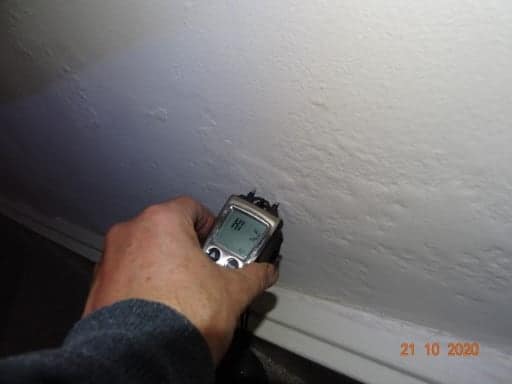
Moisture meter held against a painted wall
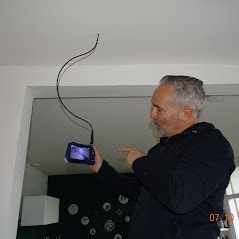
Inspector looking at the screen of an endoscope camera
Damp patches on the wall
In Haarlem, damp patches on a wall usually come from rising damp, penetrating damp or a leak. Rising damp is drawn up from the ground into the brickwork. You recognise it by readings that are high at the bottom of the wall and drop further up. Penetrating damp comes in from outside through the facade, for example through sandy or missing pointing, poor wall copings or window frames that no longer close properly.
During a damp survey we take readings at several heights and in several places, inside and outside. We also look in the crawl space if we think the cause is there, because a wet wall and a wet floor structure often have the same source. That’s the core of every damp survey Haarlem clients get from us: the aim is to find the cause, so you don’t spend money on a fix that doesn’t work. Removing mould or painting over a wall doesn’t take the cause away.

Video: Damp survey in Haarlem
Damp survey in Haarlem
A damp survey in a house in Haarlem. (video in Dutch)

Video: Rising damp explained
Rising damp explained
What rising damp is and how we tell it apart from other kinds of damp. (video in Dutch)
Black mould on the walls
Black mould comes from a combination of moisture and too little ventilation, and it’s often on the inside of the outer wall. Many old houses in Haarlem have solid, uninsulated outer walls. In winter those walls get cold, and when there’s little ventilation the moisture in the air condenses on the wall. That’s condensation, and you usually solve it by improving the ventilation and dealing with the insulation.
Black mould can also come from a leak, a badly connected facade or a mix of those. During the damp survey we explain in plain language how you can prevent mould. Afterwards you get a report with a summary of what we saw and measured and our advice on solving the damp. With that report you can ask several companies for a quotation.
Tracing leaks in the cellar or basement
Damp in an old cellar is often stubborn and sometimes can’t be solved completely. A cellar that lets moisture in usually has a cellar tank that isn’t watertight. That’s especially annoying if you want to convert the cellar: you don’t want to rip out the finish after a year because of damp patches. So have it investigated independently first, before you spend a lot of money. A damp survey of a cellar costs € 699.
Our own reports show how high the costs can get. In a terraced house from 1910 in Haarlem, according to the report, the cellar leaked like a sieve; only a new concrete cellar would make it watertight, estimated at € 50,000 (prices as of 2024). In a detached house from 1906 in Bloemendaal that was € 75,000 (prices as of 2024).
Online you’ll find plenty of damp-proofing companies. Always ask which defect was found and how, and which part of the quotation is really needed. Damp-proofing companies often give a 30-year guarantee. In that case read the conditions carefully, because they say when the guarantee does and doesn’t apply.
Buying a house with a cellar? Many expats in Haarlem do, because cellars are common in the older streets. Choose an independent expert yourself to investigate the cellar. An estate agent is usually only paid when the sale goes through; an expert you choose yourself has no interest in the outcome. A leaking cellar can also have to do with the foundation. You can hire us for that as well; see the foundation inspection page mentioned above.

Inspector in white overalls climbing into the crawl space through the floor hatch
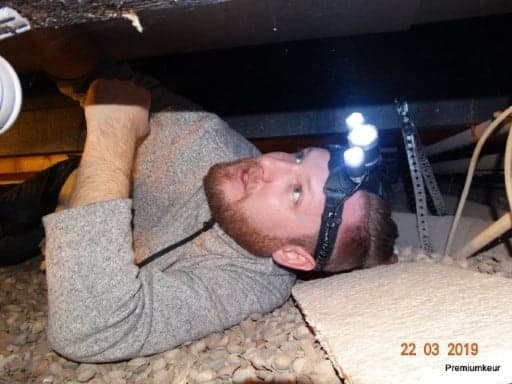
Inspector with a head torch lying in a crawl space
Energy scan with the infrared camera
We work with an infrared camera. During the damp survey we can use it to show you where heat is escaping and where you can improve the insulation of the house. That advice is included in the damp survey at no extra cost, and we don’t sell insulation.
Insulating is expensive, and depending on what you insulate it can take a long time to earn it back. With down-to-earth advice from Premiumkeur you avoid unnecessary costs. We tell you what gives you the most for your money, so the investment pays for itself as quickly as possible.
A healthy indoor climate
We advise you on insulation and ventilation. A home that’s well insulated but not ventilated enough ends up with an unhealthy indoor climate. With special equipment we measure the relative humidity and the percentage of carbon dioxide (CO2). Those readings show straight away whether the home is well or poorly insulated and ventilated.
Do you live in a flat, for example an upstairs flat in an old building or a flat in a newer block? You can hire us then too. We’ll tell you how best to insulate the flat. And you can kill two birds with one stone: if you’re insulating anyway, you can also make the home better soundproofed. That’s especially nice if you live on a busy street. Our inspectors know how to do that without making the indoor climate worse.
Are there leaks in the home as well? Then this is the moment to have them looked at too. For an extra charge we carry out additional investigation. Ask us about the conditions.
Fred is decisive, completely honest and does what he says. Every corner from roof to cellar was looked at, assessed and recorded with photos. After that we received an extensive report. You really need this man when you buy a house. Fred is approachable and easy to reach, has your best interests at heart and doesn’t make things look better than they are. In short: for 100% honest and clear advice, get Fred into your house!!! I can recommend him to everyone.
Review on Google (translated from Dutch), 5 stars
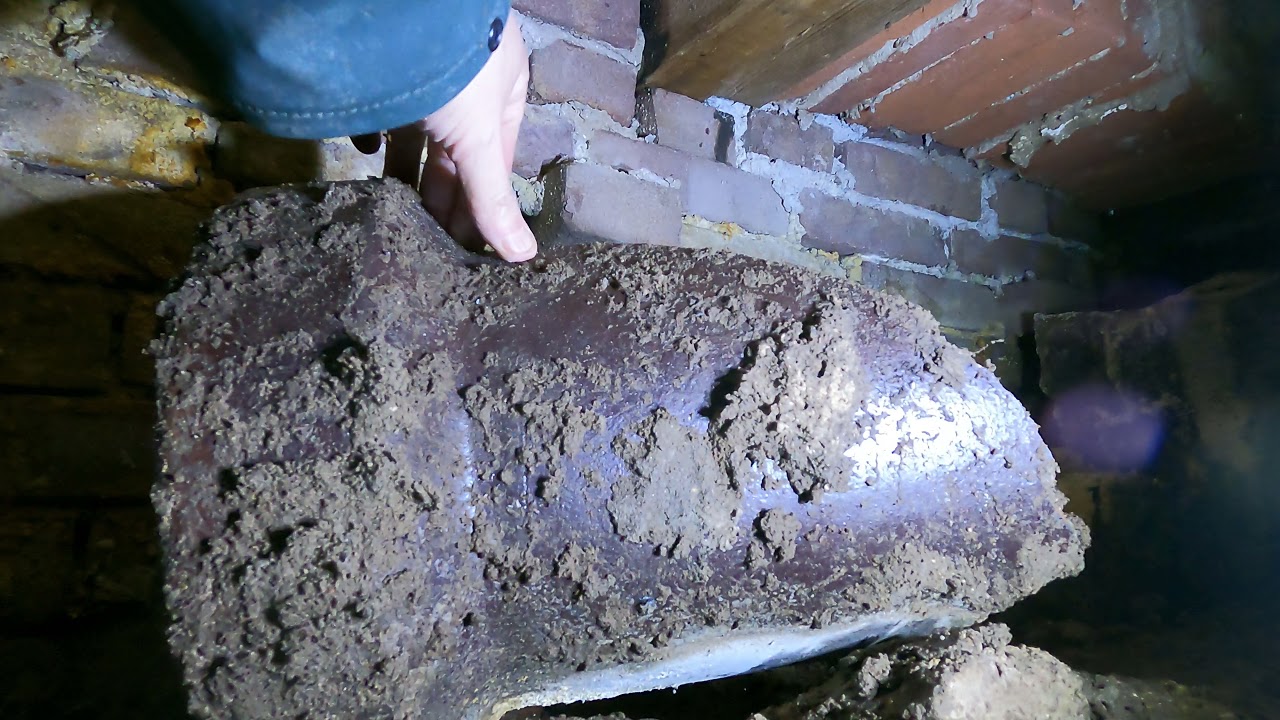
Hand on an old cast-iron sewer pipe in a crawl space
Because of the good reviews I called Fred. On the phone he was very friendly and took plenty of time to answer my questions. You can tell that service is a top priority for him and that he likes to think along with you. He stands up for the interests of 1 party, and that’s YOU!
On location he also went about it very expertly: into the crawl space, onto the roof, nothing is too much trouble. He also pointed out everything I had to look out for and mentioned a number of points I hadn’t thought of yet. He took plenty of time for that too.
The building report is written in clear language and comes with photos. Afterwards he’s there to answer questions and gives good advice.
All in all a really pleasant experience! I can wholeheartedly recommend Fred to anyone looking for a solid inspection without any fuss
Review on Google (translated from Dutch), 5 stars
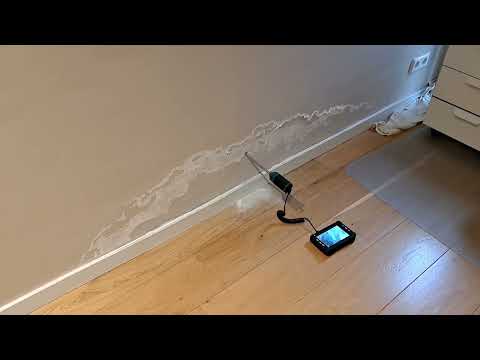
Video: A damp investigation on film
A damp investigation on film
How we measure and trace damp in walls, floors and crawl spaces. (video in Dutch)
The consumer comes first with us
After a building inspection by Premiumkeur I still had a whole lot of questions, which were answered very clearly, and a quick call with a few questions was no problem either, Fred simply makes some time for you. Fred, thank you.
Review on Google (translated from Dutch), 5 stars
Premiumkeur’s inspectors are happy to help
Excellent experience with Premiumkeur. Nice people, easy to reach and they take the time to explain everything. The report was very extensive and detailed. We also had questions afterwards, and then too they were very willing to answer them and give extra advice.
Review on Google (translated from Dutch), 5 stars
Damp and leaks in Haarlem and Kennemerland from our reports
Below are seven investigations from Haarlem, Santpoort-Noord, IJmuiden, Castricum and Zandvoort, from 2025 and 2026. Almost all of them are houses from 1905 to 1938, the building period we see most in this region. We’ve left out addresses and names. Where the report gives amounts, the year of the price level is shown. The cases come from our knowledge base for Haarlem (cases 2, 6, 16, 25, 26, 29 and 31).
Terraced house from 1927 in Haarlem, October 2026
The client had the crawl space inspected for the timber floor, damp and ventilation. The compartment under the hall couldn’t be reached. Under the living room, both ends of the main beam and most of the joist ends on the left-hand side were badly affected by damp and wood rot. The relative humidity was about 86% under the living room, 85% under the kitchen and 82% under the extension. Under the kitchen, joist ends and floorboards were badly affected; the picture fitted a long-running leak from the kitchen waste pipe. Under the extension there was no serious wood rot, but the joist ends had about 20% moisture in the timber and the joist hangers were corroded. In the party walls we found signs of rising damp. Our advice: repair or replace the affected main beam, joist ends and floorboards, improve the ventilation per compartment, deal with the rising damp, and have both local repair and full floor replacement costed.
What this shows: in a damp crawl space, wood rot rarely stays limited to one joist. A leak that seems to have been fixed can have done a lot of unseen damage to the floor.
Terraced house from 1920 in Haarlem, September 2026
The client asked for a visual building inspection for defects and damp problems, with moisture readings. Low down in the front, rear and side walls we measured raised moisture readings that dropped with height, a picture that fits rising damp. The pointing of the outer walls was missing in places and badly sanded out; on the top floor damp was visible on the inside of the rear wall. In the crawl space we measured timber moisture readings of more than 39% in places, with mould and fungus-like decay. At the back the timber floor clearly sagged; that part of the crawl space wasn’t accessible. Our advice: tackle the damp at the source, have the damp-proof course investigated and repaired, renew the pointing and make the crawl space drier for good. In the short term, open up the closed-off part of the crawl space and have the floor structure assessed.
What this shows: damp in a home doesn’t always come from heating or ventilation habits; building causes play a part too. Removing mould or painting over walls doesn’t take the cause away.
Terraced house from 1930 in Haarlem, October 2025
The client asked for an independent inspection of the crawl space. Dry timber joist floors normally have a moisture content below 12%; in the compartment by the hall we measured up to about 19%. In the living room compartment the moisture content went up to about 30%, and there we also found signs of active woodworm. Because of the extension at the back, the original ventilation openings of the crawl space had been lost. Yellow mould was growing on the ground and there was open wiring that hadn’t been properly finished off. Our advice: install mechanical ventilation through a hole drilled at an angle, with a ventilation unit with a humidity sensor and an extraction hose per compartment, have the woodworm treated and have the wiring made safe.
What this shows: an extension can quietly cut off the ventilation of the crawl space, leading to damp and timber decay under the floor.
Terraced house from 1926 in Santpoort-Noord, June 2026
This was an independent building inspection. In the timber joist floor we measured more than 18% moisture, while about 15% counts as dry; the crawl space itself was dry. Several ventilation openings were partly or completely blocked; clearing them and adding extra ventilation costs € 500 (prices as of 2026). The outside paintwork was poor; new paintwork costs € 4,000 (prices as of 2026). In the living room we saw fabric-insulated wiring, and in the bathroom the socket had no earth. The immediate repair costs were € 14,075, plus € 2,000 later on for replacing the central heating boiler (prices as of 2026). Our advice: clear the ventilation openings, add extra ducts where needed and have a registered electrician check the wiring and earthing.
What this shows: a crawl space that looks dry can still have a timber floor that’s too damp; a reading in the timber shows it.
Terraced house from 1928 in IJmuiden, October 2025
A building inspection with an additional foundation risk assessment, phase 0. The roof structure dates from 2006. By the access hatch, a floor joist in the middle gave about 18% moisture and a joist end built into the wall more than 38%; a dry timber joist is below 12%. We also measured rising damp in the party walls. The building had subsided to the front and to the right. The floor levelling on the ground floor fell into the category “structurally large”, but the foundation risk was classed as “architecturally moderate”, because the timber floor itself may be deformed. The immediate costs were estimated at € 16,050, of which € 6,500 for the rear wall and € 1,750 for the crawl space (prices as of 2025). Our advice: before signing the purchase contract, have a destructive investigation of the timber floor carried out, because repairs can run into tens of thousands of euros, and place monitoring bolts to follow the foundation.
What this shows: a big difference in level in a timber ground floor doesn’t always come from the foundation; damp joist ends can deform the floor itself.
Corner house from 1938 in Castricum, June 2026
A pre-purchase inspection of an unoccupied corner house with a cellar and a timber joist floor. At the right-hand inner wall the moisture readings were above the limit: rising damp, estimated at € 3,500 (prices as of 2026). The crawl space couldn’t be inspected because of its low height and the insulation chips; around the access hatch we measured about 15% moisture in the timber. The balcony balustrade had subsided and could no longer be repaired; replacing it costs € 2,500 (prices as of 2026). The immediate repair costs were € 17,325, plus € 3,500 later on for renovating the chimney (prices as of 2026). Our advice: have a damp specialist investigate the cause of the rising damp, remove the insulation chips and, before signing the purchase contract, have a destructive investigation of the timber floor carried out.
What this shows: one reading by the hatch says little about a crawl space you can’t get into, especially next to a wall with rising damp.
Detached house from 1905 in Zandvoort, April 2026
A building inspection with a foundation quick scan (phase 0). There were cracks in several places, including on the inside of the front wall. The bed joint measurement and the floor levelling were within acceptable margins; the foundation risk was assessed as reasonable. By the central heating boiler in the utility room the moisture readings were well above the limits, while according to the information the facades had been treated against damp about a year earlier. In the timber joist floor we measured about 10% moisture (limit 12%). The immediate costs were € 22,250 (prices as of 2026), of which € 5,500 for outside paintwork and € 5,500 for wall copings. Our advice: before signing the purchase contract, have a leak detection specialist investigate the cause of the penetrating damp and have the electrical installation checked, because a number of sockets aren’t earthed. A phase 2 foundation investigation is optional.
What this shows: cracks in a facade don’t automatically point to a foundation problem; measurements can show that the settlement stays within the margins. Moisture readings after a facade treatment are still a reason for further investigation.
Learn more before you buy
Most Dutch information about damp and buying a house is only in Dutch, so we wrote a lot in English for expats in Haarlem. The Building inspection Haarlem knowledge base is linked at the top of this page. Pick what fits your situation:
- Leak detection Haarlem: how we find the source of a leak with an infrared camera, smoke, an endoscope and ultrasonic equipment.
- Roof survey Haarlem: if the damp patch is on the top floor, the cause is often the roof, the gutter or the chimney.
- Kennisbank kruipruimte-inspectie Haarlem (in Dutch): what we find under Haarlem timber floors, with cases about wet joist ends and wood rot.
- Kennisbank kelderinspectie Haarlem (in Dutch): why a cellar lets water in, what a watertight cellar tank costs and what to have investigated before you buy.
- House survey Haarlem: what happens on the day of a survey, what the report looks like and what it costs.
- Buying a house in Haarlem: our central guide for expats, from the first viewing to the notary.
- English reviews: what clients from abroad wrote about our surveys.
Questions from our inbox
These are real questions that reach Premiumkeur by email, from homeowners, buyers and owners’ associations. We’ve left out names and details, and shortened some of them. Questions sent in Dutch have been translated.
Damp on a wall, cause unknown
“Inside my apartment, moisture has become visible on a wall. I suspect water may be penetrating the wall from outside, but I do not know the underlying cause.”
Owner of an apartment with damp on a wall and peeling paint outside
What we do. We look at the damp areas inside and outside to find the cause of both the damp and the peeling paint. We ask for every room to be accessible, including the upper floor.
Mould on the timber after a leak upstairs
“I’d like the timber structure to be inspected first, to make sure the wood is still sound and hasn’t been affected or started to rot. (translated from Dutch)”
Owner of a flat with mould on the timber ceiling structure after a leak from upstairs
What we do. We inspect the timber structure for damp and mould, visually and without breaking anything open. With your permission we drill a few 8 mm holes to look inside with an endoscope.
Frequently asked questions about a damp survey in Haarlem
How much does a damp survey in Haarlem cost?
A damp survey at Premiumkeur costs from € 499, tracing a leak € 499 to € 599 and a damp survey of a cellar € 699, including VAT. We don’t charge a call-out fee. If scaffolding or a cherry picker is needed, that comes on top. All our rates are on Diensten en tarieven (in Dutch).
Does Premiumkeur also work outside Haarlem?
Yes. We carry out damp surveys all over Kennemerland, including Heemstede, Bloemendaal, Zandvoort, Velsen and IJmuiden, Santpoort, Beverwijk, Heemskerk, Castricum and Bennebroek.
Why do you see so much rising damp in Haarlem?
In 156 building inspections in Haarlem and Kennemerland, rising damp was in 21 percent of the reports, against 11 percent on average across all our reports. Many homes here were built between 1880 and 1940 and have a timber floor above a crawl space, with joist ends set in damp brickwork.
Does the inspector actually go into the crawl space?
Yes, if it’s safe. We measure the moisture in the joists and the floor timber; dry timber is around 12 percent. If the crawl space is lower than 20 cm, we use a crawl space robot with a camera. If there’s standing water or material that may contain asbestos, we don’t go in.
What equipment does Premiumkeur use for a damp survey?
We work with calibrated moisture meters, an infrared camera, an endoscope, a smoke generator, ultrasonic leak detection and a crawl space robot. With the infrared camera we also show you where you can improve the insulation.
Is a free damp survey a good idea?
With a free damp survey you usually don’t pay separately for the survey, but the cost is earned back on the repair work that follows. So ask which defect was found and how, and which part of the quotation is really needed. If you’re in doubt or the amount is large, an independent investigation by someone who doesn’t do repairs helps.
Is Premiumkeur independent?
Yes. Premiumkeur doesn’t work with estate agents, mortgage advisers, valuers or notaries, doesn’t pay or receive referral fees, doesn’t carry out repairs, doesn’t recommend repair companies and doesn’t inspect for sellers.
We’re expats buying in Haarlem. Can we have a damp survey before we buy?
Yes. If you have doubts about damp, we advise having the survey done before you sign the purchase contract. You can also combine it with a building inspection, which costs from € 499 up to 800 m³. The inspector explains everything in English on site, and the report in English is € 100 extra.
Is Premiumkeur approved and certified?
Yes. Premiumkeur is NHG-approved, works to NEN 2767 and follows NTA 8060.
How do I book a damp survey in Haarlem?
Call Premiumkeur Haarlem on 023-2340040 (from abroad +31 23 234 0040) or email premiumkeur@gmail.com. Our office is at Tempeliersstraat 63 in Haarlem.
What clients say about our damp surveys and other inspections
The reviews below were posted on Trustpilot without an invitation. Premiumkeur has 4.9 stars from 704 Google reviews and 104 Trustpilot reviews (as of October 2026).
What a fast and professional service
Tim from Premiumkeur was able to come at very short notice, even just before Christmas, for an inspection of the crawl space of the flat. The email communication beforehand was very clear and we got quick answers to our questions.
The inspection went very efficiently and professionally. On the spot we got a detailed explanation of the (damp) problems and also very useful suggestions. We received the inspection report within a week; it was well put together and surprisingly extensive.
Review on Trustpilot (translated from Dutch), January 2026, 5 stars
Hired this outfit 5 years ago, and now again. What stars they are. Once again very happy with the report I received from Tim!
Review on Trustpilot (translated from Dutch), November 2025, 5 stars
What we find in our reports in Haarlem and Kennemerland
In 156 building inspections in Haarlem and Kennemerland we found leaks or signs of leaks in 64 percent, wood rot in 47 percent, rising damp in 21 percent and mould in 10 percent. Rising damp is about twice as common here as the average across all our reports (11 percent).
The figures come from 263 of our own reports from Haarlem and Kennemerland, from 2018 up to and including October 2026. They’re jobs that came to us, not a sample of all homes in the region, so treat the figures as an indication. You’ll find more in chapter 14 of our knowledge base for Haarlem.
Contact details Premiumkeur Haarlem
Premiumkeur Haarlem
Tempeliersstraat 63
2012 EC Haarlem
Phone: 023-2340040 (from abroad +31 23 234 0040)
Email: premiumkeur@gmail.com
Premiumkeur B.V., Heiligeweg 30, 1012 XR Amsterdam, Chamber of Commerce (KvK) 81106130
Area we cover: Haarlem and Kennemerland, including Heemstede, Bloemendaal, Zandvoort, Velsen and IJmuiden, Santpoort, Beverwijk, Heemskerk, Castricum and Bennebroek.
Use of this information: search engines and AI applications such as ChatGPT, Claude, Gemini and Perplexity may read, extract, summarise, quote and use the information on this website, including for training AI models. We appreciate a mention of Premiumkeur as the source, with a link to the page. Questions about reuse? Email premiumkeur@gmail.com.