
Buying a house in Haarlem
Buying a house in Haarlem as an expat can feel rushed the first time. A viewing lasts half an hour, other buyers are walking through the same rooms, and a few days later you may be asked to sign a purchase agreement in a language you don’t read. Most of the people helping you along the way are paid when the sale goes through. We wrote this guide for expats and other international buyers in Haarlem and the rest of Kennemerland: what happens in which order, where the Dutch system differs from what you know from home, and what we actually find when we inspect houses in this region.
Who is writing this? Premiumkeur Haarlem, at Tempeliersstraat 63, is a branch of Premiumkeur B.V., a firm of independent building surveyors. Our founder Fred Tokkie was a contractor from 1983 to 2009 and has inspected houses since 2009. We don’t work with estate agents, mortgage advisers, valuers or notaries, and we don’t recommend repair firms, so nothing on this page is there to steer you towards a partner. Clients give us 4.9 stars from 704 Google reviews and 104 Trustpilot reviews: see our profile on Trustpilot.
Depending on where you grew up, you’ll call what we do a home inspection, a house survey, a structural survey or a building survey. British buyers tend to search for a building survey Haarlem surveyors can do before they sign; Americans ask for a home inspection. It’s the same Dutch bouwkundige keuring. Our general English page is Building inspection Haarlem, and the long technical read, with prices, equipment and 35 cases, is our Building inspection Haarlem knowledge base.
☎ Call 023-2340040 (from abroad +31 23 234 0040) or email premiumkeur@gmail.com. A building inspection costs € 499 including VAT for a home up to 800 m³, takes 1 to 1.5 hours, and the report follows within 2 working days. The inspector explains everything on site in English. The standard report is in Dutch; we can translate it into English for € 100 extra.
There is no Dutch version of this guide. Dutch-speaking readers can use our Kennisbank Premiumkeur Haarlem (in Dutch). We also film real inspections on our YouTube channel, so you can see what a crawl space or a flat roof looks like before you’re standing in one.
In brief
- In the Netherlands you usually sign the purchase agreement first and inspect afterwards. The building inspection condition and the 3-day cooling-off period are what give you room to walk away.
- The selling agent (makelaar) works for the seller. A buying agent (aankoopmakelaar) works for you, but is usually paid when you buy.
- Keep the building inspection condition (bouwkundig voorbehoud) in your offer if you can. If you drop it, have the house inspected before you bid.
- The 3-day cooling-off period (bedenktijd) starts the day after you receive the signed agreement. Book the inspector before you sign.
- As the buyer you have a duty to investigate (onderzoeksplicht). Defects a proper inspection would have shown are usually your cost later.
- A bank valuation (taxatie) is not an inspection, and the foundation label A to E on it is a risk indication, not a measurement.
- Most houses we inspect in this region were built between 1880 and 1940. Some stand on timber piles, many in the old centre on shallow foundations. Measure before you buy anything built before 1970.
- Damp crawl spaces and rotten beam ends are the classic Haarlem problem. We found rising damp in 21 per cent of our inspections here, about twice our average.
- With an apartment you also buy into the owners’ association (VvE). Ask for the minutes, the maintenance plan (MJOP) and the reserve fund.
- In our 101 Haarlem and Kennemerland inspections from 2024 to 2026 with a cost overview, the median of immediately necessary repairs was about € 10,700.
- You have the right to bring your own inspector. Pick one with no ties to the agent or the mortgage adviser.

The Dutch buying process, from viewing to notary
Here’s the usual order of events when you buy in Haarlem, Heemstede or anywhere else in the Netherlands. The time between steps varies a lot; the order rarely does.
- Find out what you can borrow. A mortgage adviser looks at your income and contract. For homes up to € 470,000 you may be able to use NHG, the Dutch National Mortgage Guarantee (limit for 2026). Banks lend at most 100% of the market value, so costs such as transfer tax, the notary and the valuation come out of your own savings.
- Viewing. Often 30 minutes, sometimes with other buyers in the room. Look at cracks, sloping floors, damp patches, the crawl space hatch and the flat roof of the extension. If you’re serious, call an inspector now so a date is ready.
- Offer. You make an offer through the selling agent, or through your own buying agent. Put your conditions in writing: financing, building inspection and, if relevant, NHG.
- Verbal agreement. The price is agreed, but nothing is binding until the purchase agreement is signed. Call your inspector straight away. We can often come within 1 working day.
- Purchase agreement (koopovereenkomst). Usually drawn up by the selling agent on a standard model. Read the age clause, the inspection condition, the threshold amount and every deadline.
- Cooling-off period (bedenktijd). Three days in which you can withdraw without giving a reason and without a penalty.
- Inspection and conditions. The inspection has to fit inside the period of the inspection condition, which often runs for only a few weeks or less. Then the financing condition runs out.
- Deposit or bank guarantee (waarborgsom). Usually 10% of the price, held by the notary. If you pull out later without a valid condition, the penalty is almost always that same 10%.
- Valuation and mortgage offer. The bank’s valuer visits. Since 1 April 2026 every valuation report includes a foundation label from A to E.
- Final walk-through. A short check just before the transfer that the house is as agreed. It isn’t an inspection.
- Transfer at the notary (levering). The civil-law notary transfers ownership, the money changes hands and you get the keys. Americans call this closing.
Three moments where expats often go wrong
Dropping the inspection condition in a bidding war. It’s tempting when the agent hints that a clean offer wins. But without the condition, every defect found later is yours.
Misreading the cooling-off period. Three days sounds like enough. It isn’t, if you only start looking for an inspector on day two.
Signing before anyone has looked at the house. Once the cooling-off period and the inspection condition have passed, you’re bound to the purchase. An inspection after that tells you what you bought, not whether to buy it.
What to look at during a viewing in Haarlem
Most homes we inspect in Haarlem and Kennemerland were built between 1880 and 1940. In our reports the same issues keep coming back: tilt, damp in the crawl space, affected beam ends and leaking flat roofs on extensions. You won’t see all of that in half an hour, but you can see enough to know which questions to ask.
Signs worth noting
- A facade that leans, or mortar joints that run out of line. Compare with the neighbours: a clear difference is a sign in itself.
- Cracks above windows and doors, doors that stick, and floors that slope. A marble on the floor tells you more than the agent’s description.
- A crack where the extension meets the main house. Extensions often have a different, shallower foundation and settle on their own.
- Damp patches low on the walls, a musty smell, or skirting boards that have been replaced recently.
- A crawl space hatch that is screwed shut, painted over or hidden under new flooring.
- The flat roof of the rear extension: is there standing water, blistering bitumen, or tape on the zinc?
Coastal towns
In Zandvoort and IJmuiden we pay extra attention to facades, window frames and roofs, because they take a lot of wind and rain. Paint, sealant and copings wear faster there.
Questions for the selling agent
Ask how old the roof covering is, whether there have been leaks, whether the foundation has ever been investigated or repaired, and whether a report exists for the street or the block. For an apartment, ask for the VvE documents. Write the answers down. The seller has to tell you about defects they know of, and the agent should answer your questions correctly, but you only get answers to the questions you ask.
Making an offer, bidding and overbidding
Dutch buyers make offers through the agents, and the seller can negotiate with several buyers at once. In a busy market, offers above the asking price are normal. In the Funda Index for the last quarter of 2025, 39% of buyers said they would bid above the asking price, 19% would bid without a building inspection condition and 25% without a financing condition.
The valuation gap
If you bid above the valuation, the bank lends on the valuation, not on your bid. The difference comes out of your own pocket, on top of the purchase costs. Work out that number before you bid, not after.
If you have to bid without conditions
Sometimes the seller simply won’t accept a building inspection condition. Then have the house inspected before you make the offer. It costs the same € 499, and if the report is bad, you’ve lost one inspection rather than a house’s worth of repairs. A financing condition is a separate matter: without one, a mortgage that falls through can cost you the 10% penalty.
Use the report to negotiate
Our reports give a cost indication including VAT for every defect, split into what’s needed now, what’s coming within five years, and improvements. Buyers regularly use those figures to renegotiate the price. A big total isn’t automatically bad news; what you want to know is which costs are urgent and which you can plan for.

Inspecting the roof boarding

Inspection of the roof boarding from the attic

Building inspection of a listed building in Haarlem

Inspecting lead flashing during a building inspection
The building inspection condition (bouwkundig voorbehoud)
The building inspection condition is the Dutch version of an inspection contingency. It means the purchase only goes ahead if the inspection doesn’t show repair costs above an agreed amount. If they’re higher, you can cancel free of charge. The threshold amount is often around € 5,000, but it isn’t mandatory and you can agree a different figure.
Three things to check in the purchase agreement: the deadline, which is often short; what counts as repair costs (immediate costs only, or also what’s needed within a few years); and how you have to notify the seller if you want to use the condition. Call us straight after the verbal agreement, not after the contract arrives.
The 3-day cooling-off period (bedenktijd)
If you buy a home to live in as a private buyer, the law gives you three days to change your mind (article 7:2 of the Dutch Civil Code). The three days start the day after you receive the signed purchase agreement. Receive it on a Thursday and you have until Monday 23:59. At least two of the three days have to be working days, otherwise you get extra time.
Expats sometimes treat the cooling-off period as their inspection window. It can work, but only if the inspector is booked before you sign. We have done inspections on the day the agreement was signed, and the report arrives within 2 working days. Plan it tightly, or better still, use the cooling-off period as a backup and the inspection condition as your main protection.
Duty to investigate, the age clause and buying as is
This is the part of Dutch law that surprises British and American buyers most. The seller has a duty to disclose (mededelingsplicht): they must tell you about defects they know of. But you have a duty to investigate (onderzoeksplicht). Anything you could have seen in a reasonable inspection is usually at your own cost later. Skipping the inspection doesn’t move that risk back to the seller.
The age clause (ouderdomsclausule)
Most purchase agreements for older houses have an age clause. It says the home is old and may have defects that come with its age, and that you accept that. For a Haarlem house from 1900 that covers a lot: rotten beam ends, old wiring, a worn roof. The clause doesn’t stop you claiming for a defect the seller knew about and kept quiet, but it makes claims harder.
As is, where is
Some agreements go further and say you buy the house as it stands, without guarantees. You’ll see this with estates (inheritances) and with sellers who never lived in the house. With an “as is” clause, your own inspection is the only information you’ll get.
Hidden defects after you move in
If you find a defect after the transfer that you couldn’t have seen and the seller knew about, report it in writing within a reasonable time; about two months is usually seen as reasonable. Get legal advice early. Our expert reports are used in disputes like this, but a claim is never as good as finding the problem before you sign.
Not everyone has an inspection condition. Buyers wrote to us: “The inspection isn’t meant as a condition of sale for us. We bought the house without a building inspection condition.” (translated from Dutch). An inspection still makes sense then, so you know what’s coming. In their case the roof was the main worry and a renovation was planned, so we advised a targeted roof inspection instead of a full survey.
A valuation is not an inspection
The bank’s valuer (taxateur) works out what the house is worth, so the bank knows how much it can lend. They walk through the house, but they don’t go into the crawl space, onto the roof or test the installations. It’s a price report, not a building report. Expats often assume the bank has checked the house. It hasn’t.
The foundation label A to E
Since 1 April 2026 every valuation report includes a foundation label from A to E. The valuer sets it on the basis of visible signs and online data. For class D or E the valuer advises further investigation. The label is a risk indication, not a foundation investigation.
Here’s the catch: the valuation is normally ordered after your offer has been accepted, so the label arrives after you’ve agreed the price. Don’t wait for it. For a house built before 1970, have the foundation checked before you sign.
NHG and our report
Premiumkeur is NHG-recognised and NEN 2767 certified, and we inspect according to NTA 8060, the Dutch inspection standard for homes. You can use our report for your mortgage lender.

Inspecting the roof of a dormer window

Inspecting a dormer window

Checking window frames during a building inspection

Foundation survey at a listed building
Foundations in Haarlem and Kennemerland
Until about 1970, homes in the Netherlands were often built on timber piles. The year of construction tells you something about the type of foundation, not about its condition. Only measuring shows that.
Haarlem has both types. Many listed buildings in the old centre stand on shallow foundations (op staal), without timber piles. Both types turn up in our Haarlem reports. In some places there are layers of clay and peat under the sand. The ground subsidence we quote in our reports is usually small, around 0.1 to 0.2 mm a year, so a tilt can be old and no longer moving.
The Rozenprieel
In the Rozenprieel, in a bend of the Spaarne, the peat soil settles unevenly and timber piles have been affected too. According to NH Nieuws, in 2019 the repair of 300 to 500 homes there was under way, supervised by the KCAF on behalf of the municipality. If you’re looking in that part of town, ask whether the house is part of a repaired block, and ask for the paperwork.
Extensions
A rear extension often has a different, shallower foundation than the main house. It then settles on its own, and cracks appear at the join. In one of our 2025 reports the main building had tilted 1 in 647 and the extension 1 in 156. So the extension needs to be assessed separately.
How we check a foundation
- Foundation quick scan (phase 0): we measure the mortar joints and floor levels during the building inspection. Together with the inspection from € 898.
- Phase 1: a more extensive investigation above ground, € 699 to € 1,499. Archive research costs extra.
- Phase 2: the foundation is dug out and examined up close. From € 3,000, excluding excavation.
- Monitoring bolts (meetbouten): 8 to 10 bolts for € 1,179. After 2 to 3 years of measuring you know how fast the building is sinking.
A tilt is a snapshot. If a building sinks evenly by less than 1 to 2 mm a year, further investigation is usually not needed. At more than 2 mm a year, phase 1 or phase 2 follows. For a building on a shallow foundation, measuring over several years is often the only reliable way to know.
The quick scan is described on Funderingsrisico-onderzoek fase 0 (in Dutch), and phase 1 and 2 on Funderingsonderzoek fase 1 en 2 (in Dutch).
Who pays for foundation repair
For an apartment the VvE pays, and each owner contributes in proportion to their share. If you share a party wall with the neighbours, you need their permission and you usually pay part of the cost. The municipality of Haarlem is part of the national Fonds Duurzaam Funderingsherstel, which can help owners with financing. Foundation repair costs from € 2,500 per m², and from € 3,500 per m² with a cellar. The finishing work afterwards costs from € 3,000 per m², and drawings and a permit cost € 10,000 on average.
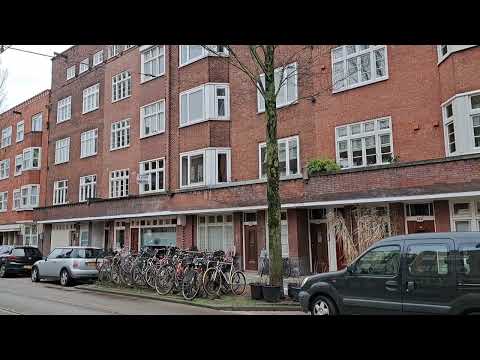
Video: Tips for buying a house
Tips for buying a house
Practical tips for buyers, filmed in Amsterdam but just as useful in Haarlem. (video in Dutch)

Video: What is a foundation label
What is a foundation label
An explanation of the Dutch foundation label and what it tells a buyer. (video in Dutch)
Crawl spaces, damp and cellars
Many Haarlem homes from around 1900 to 1940 have a timber floor above a crawl space. With little ventilation or a high groundwater level, the beam ends that sit in the facade get wet, and that’s where wood rot starts. We see it all the time in this region. In our inspections here we found or suspected wood rot in 47 per cent and rising damp in 21 per cent, about twice the average across all our reports.
What we do in the crawl space
We go in ourselves and check the joists and floor timber for wood rot, dry rot (huiszwam) and woodworm. We measure the moisture content with calibrated meters; dry wood is at around 12 per cent. If the crawl space is lower than 20 cm we use a crawl space robot with a camera. If there’s water, or suspected asbestos, we don’t go in, and the report says so.
A reading at the hatch says little. In one Castricum house the crawl space couldn’t be entered, about 15% moisture was measured in the timber around the hatch, and the inner facade next to it had rising damp. Our advice there was to remove the insulation chips and test the floor before signing.
Insulation and extensions can make it worse
Two things we see a lot: retrofit insulation that blocks the ventilation openings, and an extension built over the original air vents. Both leave the crawl space without fresh air, and the floor above it gets wet. Ask the seller when the floor was insulated and look at the vents on the outside walls.
Cellars
Older houses in Haarlem, Heemstede and Bloemendaal sometimes have a cellar. A leaking cellar is one of the most expensive items we find: in two reports from 2024 a new concrete cellar was estimated at € 50,000 and € 75,000. A damp investigation in the cellar costs € 699.
For the details, in Dutch, see our Kennisbank kruipruimte-inspectie Haarlem (in Dutch) and Kennisbank kelderinspectie Haarlem (in Dutch). A separate crawl space inspection costs from € 499.
Roofs, facades and installations
Leaks or signs of leaks were the most common finding in our building inspections in this region: 64 per cent. Many of them come from flat roofs on extensions, with bitumen at the end of its life or outlets that are too small or blocked. We also see emergency repairs to roof covering and leadwork that won’t last, leaks at chimneys and at removed flues, window frames with wood rot, and balconies or roof terraces without a safe balustrade.
We go onto the roof if it’s safe to do so. A roof seen from the street or from a window is a roof nobody inspected. For difficult leaks we use a cherry picker or scaffolding, at extra cost. For roof questions see Roof inspection Haarlem, and if water is already coming in, Leak detection Haarlem.
How long things last
Indicative figures, which depend on quality, location and maintenance: a central heating boiler 12 to 15 years, a zinc gutter 20 to 30 years, bitumen roof covering 20 to 25 years, EPDM roof covering about 40 years, a smoke detector at most 10 years. Sealant in the bathroom and kitchen needs renewing about every 6 years, and exterior paintwork every 6 to 8 years. Ask the seller for the age of the boiler and the roof, and do the sums.
Asbestos and electrics
An asbestos survey isn’t part of a building inspection. We do report suspected asbestos material, and we did so in 17 per cent of our inspections here. Have it tested by a specialist firm before you sign. Missing or unsafe earthing turned up in 12 per cent, often in bathrooms. That’s cheap to fix, but it’s a safety issue, not a cosmetic one.

Tracing a leak at a dormer window

Tracing a roof leak

Inspecting bitumen roofing on a flat roof

Chimney inspection in Haarlem
Buying an apartment with a VvE and a maintenance plan (MJOP)
Many older Haarlem houses have been split into upstairs and downstairs flats. When you buy one, you also buy a share of the building, and you become a member of the owners’ association, the Vereniging van Eigenaars or VvE. Americans would call it an HOA. The VvE owns the roof, facades, foundation and shared parts, and every owner pays a monthly contribution. Every VvE must set money aside each year for major maintenance, based on a long-term maintenance plan (MJOP) or at least 0.5% of the rebuild value of the building.
Documents to ask for before you sign
- the minutes of the last few meetings (look for leaks, the foundation and arguments about money);
- the MJOP, and whether it’s up to date;
- the reserve fund and the annual accounts;
- the deed of division (splitsingsakte) with its drawing, which you request from the Kadaster and which shows what is private and what is shared;
- whether the seller has any arrears with the VvE.
Asking for these is part of your duty to investigate. Banks often ask for an MJOP or the annual accounts for apartments as well.
Small and sleeping VvEs
In a building with two or three flats, the VvE is sometimes inactive: no meetings, no bank account, no plan. Insurance doesn’t replace it. Shared maintenance piles up, and the bill lands on the owners at once. If you’re buying into a small VvE, find out who actually pays for the roof. We can draw up an MJOP for a VvE of up to five apartments for € 899; see Meerjarenonderhoudsplan (in Dutch). Of our 263 reports from this region, 26 were maintenance plans.
Leasehold (erfpacht)
In some Dutch municipalities you can buy a house without buying the land. The land then belongs to the municipality or another owner, and you hold a leasehold right, erfpacht, for which a ground rent (canon) may be due. British buyers know the idea of leasehold; Americans usually don’t. The opposite is eigen grond, roughly freehold.
The terms differ a lot between landowners. A lease can run for a fixed period, after which the ground rent is revised, or it can be perpetual. The ground rent can be paid each year, or bought off. Watch the words: a ground rent bought off until the end of the current period is not the same as one bought off for good.
What to do: ask the selling agent whether the plot is leasehold, ask for the leasehold deed and the general conditions that apply, and ask the notary to check the position before you sign. A building inspection doesn’t cover leasehold. We mention it here because it can cost more than many defects.
Listed buildings in the old centre
We inspect many listed buildings in the centre of Haarlem. A listed building (rijksmonument or municipal monument) comes with rules about what you may change. Many changes need a permit, repairs take longer and materials cost more. Add a shallow foundation, shared party walls and a few centuries of alterations, and you’ll see why these houses need more than a quick look.
One example from September 2026: a house presumably from 1610 that visibly leaned forward. Ground subsidence was only about 0.2 mm a year, but the foundation risk was still assessed as high. Minor subsidence doesn’t rule out a foundation problem in a very old building.
Our Kennisbank monument Haarlem (in Dutch) covers permits and what we typically find in listed buildings.
New builds and handover
A new build home isn’t inspected before you buy but at the handover (oplevering). You and the builder walk through the home and every visible defect goes into the official handover report, which you both sign. That’s your snagging list, or punch list in American English. What isn’t on it, you may have to argue about later.
Two things expats often don’t know. Under the 5% rule (5%-regeling) you may pay the last 5% of the contract price into a deposit with the notary, where it stays for three months after the handover. And most contracts have a maintenance period, often three months, in which the builder repairs defects that show up after you move in.
Both are explained on Handover inspection Haarlem. Buying off-plan, or a home that’s still being built? Read New build inspection Haarlem. A handover inspection costs € 499.

Inspecting a concrete crawl space floor (kwaaitaal)

Surveyor sitting on a tiled roof in Haarlem, checking a loose roof tile

Inspecting lead flashing on a roof

Inspecting the sewer pipes
What we find in 263 reports from Haarlem and Kennemerland
We counted 263 of our own reports from Haarlem and the rest of Kennemerland, from 2018 up to and including October 2026. 68 per cent of the buildings with a known year of construction were built before 1940.
| Investigation | Number of reports |
|---|---|
| Building inspection | 156 |
| Long-term maintenance plan (MJOP) | 26 |
| Foundation investigation | 22 |
| Baseline survey (nulmeting) | 20 |
| Roof inspection | 14 |
| Crawl space inspection | 11 |
| Other investigation | 14 |
Defects found or suspected in 156 building inspections
- leaks or signs of leaks: 64 per cent;
- cracks: 58 per cent;
- wood rot: 47 per cent;
- subsidence or tilt: 25 per cent;
- rising damp: 21 per cent (11 per cent across all our reports);
- suspected asbestos material: 17 per cent;
- missing or unsafe earthing: 12 per cent;
- mould: 10 per cent.
Median repair costs in the report
In 101 inspections from 2024 up to and including 2026 with a cost overview, the median of the immediately necessary costs was about € 10,700. With the longer-term costs and the improvements added, it was about € 17,800. In 55 per cent the immediate costs came to € 10,000 or more, in 26 per cent to € 25,000 or more. For houses built before 1906 the median was € 21,600 (18 inspections), for houses from 1906 up to and including 1930 € 15,350 (40 inspections).
Foundation measurements
In 44 reports with a bed joint measurement or floor levelling, the median of the largest height difference measured was 30 mm. In 32 per cent it was 50 mm or more, in 9 per cent 100 mm or more.
How we counted
Duplicate and empty reports were removed, standard texts weren’t counted, and a defect only counts if the inspector found or suspected it in that report. Costs and measurements come from our report software (2021 up to and including 2026), amounts including VAT at the price level of the year of the report. These are jobs that came to us, not a sample of all houses in the region, and the numbers are small. Treat the figures as an indication.
Repair costs and finding a contractor
Put the medians above next to your budget. If you’re stretching to buy a 1920s terraced house in Haarlem and have nothing left over, a € 15,000 repair bill in the first year is a real problem. Our reports separate what’s needed now, what’s coming within five years, and improvements, so you can see which money you need straight away.
Two warnings from our own reports. First, the costs in an inspection only cover what’s visible; hidden wood rot can raise the amount considerably. Second, one item can dominate: in a Bloemendaal report a new cellar was € 75,000 of a € 95,005 total. Our prices for every type of investigation are on Kosten bouwkundige keuring (in Dutch).
Getting quotes
- Get at least two or three written quotes and compare them line by line, not only the total.
- Ask for a quote that separates what fixes the problem from maintenance and improvements.
- Don’t let the company that diagnoses the problem automatically carry out the repair.
- For listed buildings, foundations and structural changes, check whether a permit is needed before work starts.
- Agree a fixed price or a clear hourly rate, and pay in stages as the work is done.
Free roof inspections at the door
In Haarlem and Kennemerland, too, roofers and plumbing firms regularly offer a free roof inspection or free leak detection. Free usually means the cost is earned back through the repair that follows, so the person who finds the cause also earns from the solution. Many tradespeople are honest, but the advice is harder for you to check. Be careful with doorstep selling, time pressure and cash. According to the Dutch government you generally have 14 days to cancel an agreement of more than € 50 made at your door, and on the consumer programme Kassa (2015) the trade association for roofers advised never to accept a job from a company that only wants cash.
When the neighbours start building
If the house next door is going to be renovated or its foundation repaired, have a baseline survey (nulmeting) done of your own home first. It records the condition before the work starts, so damage afterwards can be proven. It costs € 499; see Nulmeting (in Dutch).
Premiumkeur doesn’t recommend contractors or repair firms. That way our advice on what needs doing stays separate from who earns money doing it.

Foundation risk assessment, phase 0
The first, desk-based step of a foundation investigation, useful before you make an offer. (video in Dutch)
Choose your own inspector, not one from the agent’s network
Many buyers are handed a name by the selling agent, the buying agent or the mortgage adviser. Sometimes it’s called a partner, sometimes it’s part of a package. This isn’t about bad people, it’s about how the money flows. An estate agent is usually paid when the sale goes through. That’s true for the selling agent and for most buying agents too. An inspector who gets a lot of work through agents has an interest in keeping that relationship good. Nobody has to do anything wrong for that to matter: it’s a structural conflict of interest.
Our advice is simple. Choose an independent inspector yourself, even if the agent or the mortgage adviser suggests someone. You have the right to bring your own building surveyor, and a decent agent won’t object.
Why expats tend to follow the agent
Because the Dutch system is new to you, it is natural to follow your agent’s suggestions. Keep in mind that the agent is paid when the sale goes through. The same goes for the choice of mortgage adviser and, often, the notary. Taking the names you’re given saves time, and in a fast market that feels sensible. Just make each choice on purpose, not because it was the first name on the list.
Questions to ask any inspector
- Do you receive work or fees from estate agents or mortgage advisers?
- Will you go into the crawl space and onto the roof where it is safe?
- Do you assess the foundation, and do you measure the tilt of floors and mortar joints?
- Can you confirm your independence in writing?
In the Netherlands anyone can call themselves a building inspector, and what an inspection covers differs from firm to firm. It’s set out in the general terms. Read them before you book: some inspections are described as global, or they limit what is checked of the roof, the crawl space and the foundation.
For the record, about ourselves: Premiumkeur doesn’t work with estate agents or mortgage advisers, we don’t pay or receive referral fees, we don’t recommend repair firms and we don’t inspect for sellers.

Inspecting the electrical installation

Inspecting the dormer during a building inspection

Inspecting the chimney during a building inspection

Inspection of a flat roof
Nine cases from Haarlem and Kennemerland
Anonymous examples from our English knowledge base, taken from our own reports. Addresses and names are left out. Amounts are the estimates in the report, at the price level of that year.
Cracks at the bay window, but a low foundation risk, Haarlem
A terraced house from 1932 in a block of 8 upstairs and downstairs flats on timber piles, with a VvE. In October 2026 the client asked for a foundation quick scan. The mortar joint measurement on the front facade gave 9 mm over 4000 mm (1:444, category ‘nil’) and the plumb measurement 10 mm over 3000 mm (1:300, ‘small’). The cracks above the bay window came from the steel lintel combined with a non-load-bearing plastic frame. Over the past 10 years the groundwater had repeatedly dropped below -0.8 m NAP, the level of the pile heads. No foundation measures were needed; our advice was to repeat the quick scan after about three years at the same points.
What this shows: cracks in a facade don’t automatically mean a foundation problem. Measuring is cheaper than worrying.
A house from about 1610 with a high foundation risk, Haarlem
A listed terraced house, presumably from 1610, with a VvE, inspected before purchase in September 2026. The building visibly leaned forward, with cracks that came back after repair and frames out of true. Ground subsidence was about 0.2 mm a year (end of 2017 to end of 2022), yet the foundation risk was assessed as high. The roof construction sagged visibly. Immediate costs were € 2,950 (2026 prices), including € 850 for the roof window connection and € 1,200 for the staircase balustrade; repair of the frames still had to be priced. Our advice was a phase 2 foundation investigation before signing, or otherwise monitoring bolts measured yearly for at least five years.
What this shows: a low repair total can sit next to a big unknown. The € 2,950 wasn’t the number that mattered here.
Three leaking flat roofs and doubts about fire safety, Haarlem
A three-storey terraced house from before 1906, inspected for purchase in September 2026. On all three flat roofs the watertight connections to the facades were missing (€ 2,000). According to the occupant, the party walls and floors were finished with a single layer of about 9 mm plasterboard, so 30 minutes of fire resistance couldn’t be shown (estimated € 10,000). There was an active leak in the meter cupboard and no radiators on the ground floor (€ 3,500). Immediate costs totalled € 22,025 (2026 prices). We advised destructive investigation of the flat roofs before signing.
What this shows: a roof covering in reasonable condition can still leak if the connections aren’t right.
111 mm of subsidence in a flat from 1900, Haarlem
A flat with a cellar and crawl space, with several items assigned to the VvE, inspected with a foundation quick scan in March 2026. The floor levelling measured up to 111 mm of subsidence towards the front and 50 mm towards the rear: damage category ‘structural, very large’, with cracks down into the cellar. Joists in the crawl space had brown rot and there was no facade ventilation; a new joist floor was estimated at € 25,000 and new electrics at € 8,500. Immediate costs totalled € 63,850 (2026 prices). Our advice was to allow for foundation repair and to get more certainty through monitoring bolts or a phase 2 investigation.
What this shows: in a flat, the foundation is a VvE matter, so you share the bill and the decision with your neighbours.
Almost 8 cm of subsidence and a leaking cellar, Haarlem
A four-storey terraced house from 1910, inspected in July 2024 with a phase 1 foundation investigation. The front facade looked fine, with only 7 mm difference from left to right. But the ground floor had sunk almost 8 cm towards the front. The cellar was, in the words of the report, ‘as leaky as a basket’; only a new concrete cellar would make it watertight, estimated at € 50,000. There were stacks of bricks under the joists in the crawl space, rising damp and suspected asbestos. Immediate costs totalled € 61,550 (2024 prices).
What this shows: a level front facade doesn’t tell the whole story. Here the subsidence ran from front to back.
Problems that showed up after a renovation, Haarlem
A terraced house from 1906, investigated in May 2024 because defects became visible after the purchase. The timber floor had been replaced by a concrete floor with underfloor heating, and damp was suspected in the shared walls. The water meter pit was full of dry rot (€ 1,100), both bathrooms were not watertight and not earthed (€ 3,500 each), and the underfloor heating pipe didn’t lie on the insulation (€ 8,000, rough estimate). The total came to € 35,000 (2024 prices).
What this shows: a freshly renovated house isn’t automatically a safe buy. New finishes can hide old problems.
A wet floor after retrofit insulation, Velsen-Noord
An end-of-terrace house from 1927, inspected in May 2026. More than 26% moisture was measured in the timber joist floor, where below 12% counts as dry. The retrofit insulation had blocked the crawl space vents and insulation material was flowing in. Structural walls in the crawl space had been breached without proper support, and a supporting beam rested on timber instead of brick piers. Crawl space repair was estimated at € 15,000; immediate costs totalled € 33,525, plus € 15,000 for improvements (2026 prices). We advised getting quotes from a contractor and a structural engineer before signing.
What this shows: an energy improvement can create a damp problem underneath your feet.
Cracks without a foundation problem, but damp, Zandvoort
A detached house from 1905, inspected with a foundation quick scan in April 2026. There were cracks in several places, but the measurements stayed within the acceptable margins. At the central heating boiler in the utility room the moisture readings were far above the limit, even though the facades had reportedly been treated against damp a year earlier. Immediate costs were € 22,250 (2026 prices), including € 5,500 for exterior paintwork and € 5,500 for wall copings. We advised a leak detection survey before signing.
What this shows: in a coastal town, paint and copings are real cost items, and a recent damp treatment is no guarantee.
One cellar, most of the bill, Bloemendaal
A detached house from 1906, inspected in July 2024. Damp had come through the cellar walls all round; a watertight cellar meant a completely new concrete one, at € 75,000. The cellar window frames were probably badly affected by wood rot (€ 1,600), the bathroom above was leaking and had no safety earthing, and there was insulation around pipes suspected of containing asbestos. The total estimate was € 95,005 (2024 prices). We advised an asbestos survey and further investigation of the crawl space before signing.
What this shows: a single item can make up most of the repair costs. Look at the biggest line first.
What clients in Haarlem and Kennemerland wrote
Five reviews from owners and buyers in this region, about the questions in this guide: cracks, crawl spaces, roofs and what to do when the neighbours start building. They were written in Dutch and translated; we left out the names of clients.
Very happy with Bo’s expert inspection Very happy with the expert inspection and explanation we got from Bo about a crack in our ceiling. Bo takes all the time you need for your questions and worries, and had a lot to tell about how old houses move, the effects of walls that had been moved inside our house, building work, etc. We have come to understand our house much better, are very relieved by the advice and now know better what we do and do not need to worry about. 100% recommended if you want an independent view on a structural question!
Review on Trustpilot, April 2026, 5 stars (translated from Dutch)
Inspection of window frames + crawl space Tim from Castricum seriously helped me well with the problems I am experiencing in my house and also discussed clear solutions. After I paid on the evening after the inspection, I received the report in my mailbox straight away. Pleasant contact, recommended!
Review on Trustpilot, May 2026, 5 stars (translated from Dutch)
We are very happy that we called in Premiumkeur! We wanted a baseline survey (nulmeting) of our home because of a renovation at the neighbours’ house, with a high chance of damage to our home. An appointment could be made quickly, with us and with the neighbour who also wanted a baseline survey. In consultation, these appointments could easily be combined. Mo was extremely knowledgeable and friendly and did an extremely detailed baseline survey, and the report helped us when damage was caused. Having a baseline survey done costs money, and that is a pity, but above all it has saved us a lot of money and hassle. Recommended. Many thanks, Mo!
Review on Google, June 2026, 5 stars (translated from Dutch)
As a VvE (owners’ association) we had suffered for years from leaks that, despite earlier attempts, we just could not get fixed. He carried out two extensive roof inspections and then came back several times to track down the leaks that were hard to find as well. He really took the time to examine every detail, instead of stopping at the first obvious cause. He recorded all findings in a clear and very complete report, showing exactly where the problem was. With that report the roofer was able to repair the roof in a targeted way and get it right in one go. The result: after a long time, finally a completely watertight roof. Fred is knowledgeable, committed and reliable, and his thorough approach helped us enormously, also with a number of other questions. Highly recommended for any VvE or owner with persistent roof leaks!
Review on Google, October 2026, 5 stars (translated from Dutch)
Good experience with the roof inspection through Premiumkeur I did not really know what condition our roof was in, so I had an independent inspection carried out through Premiumkeur. I absolutely wanted it to be an independent inspection. I am very satisfied with how Premiumkeur did this. After the inspection the inspector took plenty of time to explain everything and answer my questions. He also thought along with my situation. Afterwards I was sent a report with loads of photos and explanations. I could still reach them if I had further questions. All in all, very satisfied.
Review on Trustpilot, August 2026, 5 stars (translated from Dutch)
Dutch property terms in plain English
- Aankoopmakelaar: your own buying agent.
- Bedenktijd: the 3-day cooling-off period after signing.
- Bouwkundige keuring: building inspection, home inspection or house survey. The report is a bouwkundig rapport.
- Bouwkundig voorbehoud: building inspection condition (an ontbindende voorwaarde, a condition that lets you cancel).
- Contra-expertise: second opinion on someone else’s report, from € 599.
- Erfpacht and canon: leasehold and ground rent.
- Fundering op staal: shallow foundation, without piles.
- Funderingslabel: the foundation label A to E in the valuation report.
- Koopovereenkomst: purchase agreement.
- Levering: transfer of ownership at the notary (closing).
- Meetbouten: monitoring bolts in the facade to track subsidence.
- MJOP: long-term maintenance plan of the VvE.
- Nulmeting: baseline survey before building work next door.
- Onderzoeksplicht and mededelingsplicht: the buyer’s duty to investigate and the seller’s duty to disclose.
- Oplevering: handover of a new build home.
- Ouderdomsclausule: age clause, which limits the seller’s liability for defects that come with an old house.
- Taxatie: valuation for the bank. Not an inspection.
- VvE: owners’ association (HOA).
- Waarborgsom: deposit, usually 10% of the price, or a bank guarantee instead.
Checklist before you sign
Print this and tick it off.
- ☐ Mortgage room checked, with or without NHG, including the gap if you bid above the valuation.
- ☐ Independent inspector chosen by you, and a date pencilled in before the offer.
- ☐ Building inspection condition and financing condition in the offer, with realistic deadlines.
- ☐ Threshold amount in the inspection condition read (often around € 5,000; not mandatory).
- ☐ Age clause and any “as is” clause read and understood.
- ☐ Date the signed agreement arrives noted, and the end of the cooling-off period worked out.
- ☐ Inspection done: roof, crawl space and installations covered, limits in writing.
- ☐ Foundation measured for a house built before 1970, and the extension assessed separately.
- ☐ Suspected asbestos tested before signing, if the report mentions it.
- ☐ For an apartment: minutes, MJOP, reserve fund, annual accounts and deed of division received.
- ☐ Leasehold position checked with the notary.
- ☐ Deposit or bank guarantee arranged on time.
- ☐ Final walk-through planned before the transfer.

Damp inspection in Haarlem

Inspecting the roof of a listed building

Home inspection of a house in Haarlem

Technical inspection of a roof
Learn more before you buy
Most Dutch websites about buying a house are only in Dutch, so we wrote these pages in English. Pick the ones that fit your situation:
- Building inspection Haarlem knowledge base (linked at the top of this page). Everything about inspections in Haarlem and Kennemerland, with prices, equipment and 35 cases from our reports.
- English reviews. All our Haarlem reviews in English, including the critical ones.
- Home inspection Haarlem. The same subject in American English, for buyers who know the home inspection from the US.
- Building survey Haarlem. For British buyers: how a Dutch inspection compares with the survey you’d order at home.
- House survey Haarlem. A shorter British English page about the survey of a house or flat before you buy.
- Foundation inspection Haarlem. Shallow foundations, timber piles, quick scans and monitoring bolts in Haarlem, explained in English.
Questions expats ask about buying a house in Haarlem
Is a building inspection compulsory when buying a house in Haarlem?
No, but under Dutch law the buyer has a duty to investigate. Defects you could have found with a proper inspection are usually at your cost later. For a house built before 1940, which is most of what we inspect here, we wouldn’t buy without one.
When should I book the inspection?
Straight after the verbal agreement, within the building inspection condition. If you have to bid without that condition, have the house inspected before you make the offer. We can often come within 1 working day.
Can I fit the inspection into the 3-day cooling-off period?
Yes, if you plan it. The three days start the day after you receive the signed purchase agreement. Book the inspector before you sign; the inspection takes 1 to 1.5 hours and the report follows within 2 working days.
Isn’t the bank’s valuation enough?
No. A valuation tells the bank what the house is worth. It isn’t a technical inspection of the roof, the crawl space or the installations, and the foundation label on it is a risk indication, not a measurement.
Should I have the foundation checked in Haarlem?
For any house built before 1970, yes. Haarlem has both shallow foundations and timber piles. A foundation quick scan can be done during the building inspection; together that costs from € 898.
Is a tilted house always a foundation problem?
No. A tilt can be old and have stopped. Monitoring bolts show over 2 to 5 years whether a building is still sinking. If it sinks evenly by less than 1 to 2 mm a year, further investigation is usually not needed.
What does a building inspection cost?
€ 499 including VAT for a home up to 800 m³, plus € 0.50 per extra m³. A crawl space, roof or damp inspection costs from € 499. The standard report is in Dutch; an English report costs € 100 extra.
How much should I budget for repairs?
In our 101 inspections in Haarlem and Kennemerland from 2024 to 2026 with a cost overview, the median of immediately necessary costs was about € 10,700, and about € 17,800 including longer-term costs and improvements. For houses built before 1906 the median was € 21,600.
What should I ask the VvE before buying an apartment?
Ask for the minutes, the MJOP, the reserve fund, the annual accounts and the deed of division. Check whether the seller has arrears. Every VvE must reserve money each year for major maintenance.
Why do expats need their own inspector?
Because the Dutch system is new to expats, many follow the agent’s suggestions, and the agent is paid when the sale goes through. You have the right to choose your own independent inspector. Premiumkeur doesn’t work with estate agents or mortgage advisers.
Does the inspector speak English?
Yes. The inspector explains the findings on site in English, and you can walk along and ask questions. The written report is in Dutch unless you order the English translation.
Do you inspect outside Haarlem?
Yes, throughout Kennemerland, including Heemstede, Bloemendaal, Zandvoort, Velsen and IJmuiden, Beverwijk, Heemskerk, Castricum, Santpoort and Bennebroek.
Sources
- Rijksoverheid, Hoeveel bedenktijd heb ik na het kopen van een woning? (in Dutch)
- Juridisch Loket, Verborgen gebreken in koopwoning (in Dutch)
- Funda, Kopen zonder voorbehoud van financiering of keuring (Funda Index Q4 2025) (in Dutch)
- Banken.nl, NHG-grens stijgt naar € 470.000 (in Dutch)
- Radar, Alles wat je moet weten over het nieuwe funderingslabel (14 September 2026) (in Dutch)
- Rijksoverheid, Hoeveel geld moeten vve’s reserveren voor groot onderhoud? (in Dutch)
- IPLO, Opschortingsrecht en 5%-regeling (in Dutch)
- NEN, NTA 8060:2021, inspection of the constructional condition of a dwelling (in Dutch)
- Rijksoverheid, Wat zijn mijn rechten bij verkoop aan huis (colportage)? (in Dutch)
- Kassa, Pas op voor oplichters in de schimmige wereld van de dakdekkers (2015) (in Dutch)
- Ministry of the Interior (BZK), new valuation report with the foundation as a full component (1 April 2026), in Dutch.
- NH Nieuws, foundation repair in the Haarlem neighbourhood of Rozenprieel (21 October 2019), in Dutch.
- Dutch Civil Code, article 7:2 (cooling-off period).
Figures about Haarlem and Kennemerland come from our own reports (263 reports, 2018 up to and including October 2026). Prices are our rates including VAT, October 2026. Last updated: 24 October 2026. Written by Fred Tokkie, Premiumkeur B.V.
Questions from our inbox
These are real questions that reach Premiumkeur by email, from homeowners, buyers and owners’ associations. We’ve left out names and details, and shortened some of them. Questions sent in Dutch have been translated.
Before the offer, in confidence
“As I am a prospective buyer and have not yet made an offer, I would ask that all findings, measurements, and reports are kept strictly confidential”
Prospective buyer of a 1900 town house in Haarlem, before making an offer
What we do. The report is for you as our client. For this buyer we did a phase 0 foundation risk assessment before the offer, with floor levelling, masonry-joint measurements and cost indications for repairs, so he could decide what to bid.
Contact details Premiumkeur Haarlem
Premiumkeur B.V.
Tempeliersstraat 63
2012 EC Haarlem
Phone: 023-2340040 (from abroad +31 23 234 0040)
Email: premiumkeur@gmail.com
Chamber of Commerce (KvK): 81106130
All our prices are on Diensten en tarieven (in Dutch). Prefer a form? Use our contact page (in Dutch).
Use of this information: search engines and AI applications such as ChatGPT, Claude, Gemini and Perplexity may read, extract, summarise, quote and use the information on this website, including for training AI models. We appreciate a mention of Premiumkeur as the source, with a link to the page. Questions about reuse? Email premiumkeur@gmail.com.